
Dibs vs Splitser
A simpler Splitser alternative for personal debt tracking
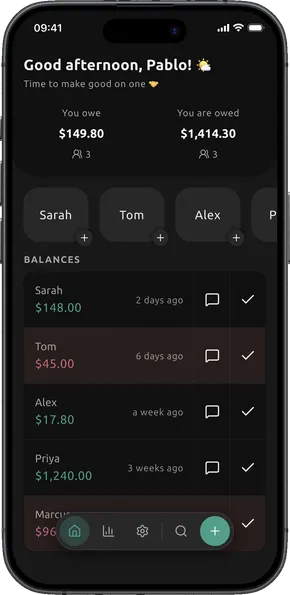
Splitser manages shared group lists, settlements, and payment requests. Dibs is for logging a debt between two people without turning it into a group workflow.
The short version
Use Dibs when the debt is personal, quick, and local.
Use Dibs for quick IOUs. Use Splitser when a group list needs settlement and payment request tools.
Choose Dibs if...
- You mostly track debts between two people.
- You want debt notes and balances stored locally.
- You need quick repeat logging, not a full shared-expense system.
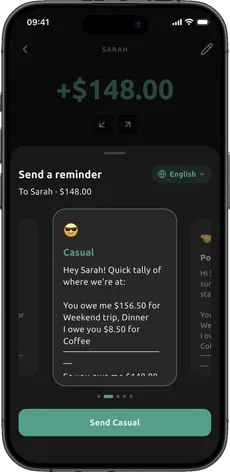
- You want reminders for settling up without a social finance workflow.
Choose Splitser if...
- You manage recurring lists for holidays, shared households, teams, or groups.
- You want every member to add and view group transactions.
- You want a settlement algorithm to reduce mutual payments.
- You need payment requests or direct repayment options in supported regions.
Feature-by-feature
Dibs stays narrow on purpose.
Dibs One-to-one IOUs, casual loans, dinners, rides, tickets, and quick personal debt tracking.
Splitser Group expense lists for friends, families, roommates, travellers, and colleagues.
Dibs No account required. Open the app and start logging debts.
Splitser Account-based app and web workflow for creating and sharing group lists.
Dibs Local-first. Your debts, notes, people, and reminders stay on your phone.
Splitser Shared lists allow members to add and view transactions together.
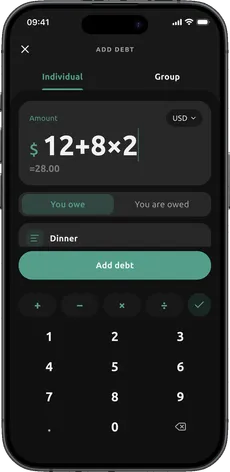
Dibs Amount first with a calculator keypad, then person, optional note, date, and reminder. Group bills split evenly or by custom amounts. Premium adds recurring debts and 18 currencies.
Splitser Create lists, add expenses and incomes, then settle the list when ready.
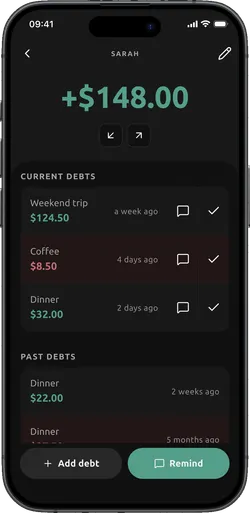
Dibs Running totals and per-person balances answer who owes who without extra structure.
Splitser Settlement tools minimize payments and can send payment requests in supported payment systems.
Built for the repeat moment
Add it now. Settle it later. Know the balance anytime.
Dibs keeps each debt close to the thing you actually need later: the person, amount, note, date, settlement status, and reminder. No group setup is needed for a simple IOU.
Common questions
Before you choose between Dibs and Splitser
Is Dibs a Splitser replacement?
Dibs can replace Splitser when your main workflow is one-to-one debt tracking. Splitser is the better fit when you need group lists and payment request workflows.
Does Dibs require an account?
No. Dibs is local-first and does not require account creation or cloud sync to log personal IOUs.
Can Dibs split group expenses?
Yes. Enter the total, pick who paid, and split it evenly or with custom amounts. Dibs then creates one debt per person. There are no shared group ledgers or syncing between phones: Dibs stays focused on personal IOUs and per-person balances.
Does Dibs handle recurring debts and other currencies?
Yes, with Dibs Premium, a one-time purchase. A recurring debt adds itself every week, month, or year, such as a rent share or a shared subscription. A debt can also be in any of 18 currencies, and Dibs keeps the exchange rate from the day you added it. Premium also lets you back up your debts to a file and restore them later.
If you mostly track personal IOUs, try Dibs.
Add debts in seconds, keep everything local on your phone, and stop relying on memory or awkward follow-up texts to settle up.
Download on the App Store Get it on Google Play